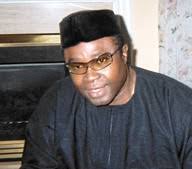
“THE ROLE OF SOCIAL MEDIA IN HUMAN CAPACITY DEVELOPMENT AND THE DEVELOPMENT OF IGBOLAND”, A SPEECH DELIVERED BY THE CHAIRMAN MBAISE POLICY ROUNDTABLE (MPR), PROFESSOR EDDIE OPARAOJI, GUEST SPEAKER, AT THE 8TH PROFESSOR CELESTINE ONWULIRI MEMORIAL LECTURE, HELD DECEMBER 12, 2020.
Introduction Even though the concept of social media cannot be said to be an entirely new phenomenon, it is apt to say that in the 21st century it has become the most important technological innovation that has shaped human interaction and communication. In our age and time, the social media; or what many have called the “new media” has become significantly revolutionized in such a way that social relations, not just among individuals but also among communities, have been tremendously impacted.
Social media use has skyrocketed over the past decade and a half. Whereas only five percent of adults in the United States reported using a social media platform in 2005, that number is now around 70 percent. The evidence is also clear that Social media is even more popular among teens where 81 percent are on social media, and more than a third report using social media sites multiple times an hour.
These statistics have risen dramatically over the past six years, likely driven by increased access to mobile devices. Growth in the number of people who use Facebook, Instagram, Twitter, and Snapchat and other social media platforms — and the time spent on them—has garnered interest and concern among policymakers, teachers, parents, and clinicians about social media’s impacts on our lives.
Facebook, the largest social media platform in the world, has 2.4 billion users. In 2020, over 3.6 billion people were using social media worldwide, a number projected to increase to almost 4.41 billion in 2025. These are huge numbers especially when juxtaposed alongside 7.7 billion people in the world. No wonder it (Social media) has changed the world. The rapid and vast adoption of these technologies is changing how we access information, connect with friends and families, and how we organize to demand social political change.
One is persuaded to assume that the rapid evolution and revolution of the social media may have been driven, not just by the rapid advances in digital technology, but more by the compelling need of man to communicate in a more efficient and effective way and in real time. It is this capacity of the social media to effectively and efficiently mediate communication in real time that recalibrated its impact on human capacity development as well as the development of communities.
In real terms, the social media is a form of mass media. The Merriam-Webster Dictionary has defined this form of mass media as “forms of electronic communication through which users create online communities to share information, ideas, personal messages, and other content such as videos.” As stated earlier, common social media platforms include Facebook, Instagram, YouTube, Snapchat, and Twitter. Many perspectives have been evoked on how this form of communication has transformed human capacity and development in our time. On one side are those suggesting that the social media has done more harm than good; because of the difficulty in regulating its contents. However, there are those who argue that the social media has stimulated human capacity development and therefore can drive the development of any society including Igboland.
Thus, the aim of my presentation here today is to explore the role of the social media in human capacity development from the standpoint of using such internet-based avenues of information exchange, news, knowledge and skills, in capacity-building; and also how this capacity can be deployed in the development of the Igbo homeland. In doing this, this paper will attempt to establish a nexus between the application of the social media, and development.
Overview of Human Capacity Development: The question of societal development has always been linked to the painstaking harmonization of the inherent capacities of the people living in the society. Relying on this assumption, scholars (Pollyn et.al, 2016), have argued that from the dawn of history individuals and communities have always tried to drive their development process by identifying, developing and utilizing the various capacities of its people for sustainable development.
What this means is that different people in society have different capacities which must be harnessed for the overall benefit of that society. In truth, in whatever form we contextualize the development process of society, the end point always is to meet the expectations of the people in terms of enhancing the standard of living and helping to drive the development process.
Put into proper perspective, the foregoing indicates that effective human capacity building and development is the engine room of progressive development. In other words, when we talk about the development of any society, we are not merely talking about structures, we are basically referring to the progressive realization of the capacities, abilities and talents of each individual in that society for their own satisfaction and enhancement of the good of the community at large (Guyana National Development Strategy, 2012).
The implication of this, is that no society can ignore the continuous improvement of the skills, knowledge-base, education, competencies, and the strategic alignment of its people, communities, businesses and other institutions, to national development, without a concerted effort to effective human capacity building and development. This is a sine-qua-non for an all-round sustainable development (Ikharehon, 2007).
What is Capacity-Building or Capacity-Development? Capacity-building or capacity-development can be defined as the process by which individuals and organizations obtain, improve, and retain the skills, knowledge, tools, equipment, and other resources needed to do their jobs competently (Wikipedia). Such capacity-building or development gives individual members of society the latitude to perform their tasks with greater efficiency and capacity. According to the UNDP (1991), capacity-building is the creation of an enabling environment with appropriate policy and legal frameworks, institutional development, including community participation, human resources development, and strengthening of managerial systems. It is the elements that give fluidity, flexibility and functionality of a community to adapt to changing needs of the population that is serves.
The Ford Foundation (1996), has also defined capacity-building as the “process of developing and strengthening the skills, instincts, abilities, processes and resources that organizations and communities need to survive, adapt, and thrive in the fast-changing world.
Basically, capacity-building encompasses all aspects of awareness-raising, education and training, attitude change, confidence-building, participation in decision-making, and action. A critical goal of human capacity development is that of maximizing people’s potential to contribute to development by participating fully in all its activities. Through capacity-building, individuals and groups are empowered to expand their abilities to fully participate in the development process.
The Social Media, Capacity Development and the Development of Igboland In the earlier sections of this talk, I defined capacity-building or capacity development as expanding one’s existing levels of knowledge, skill, and information to accommodate current and future adjustment needs. We argued that capacity-building involves strengthening the knowledge-base, abilities, skills, and behaviour of individuals and improving institutional structures and process in such a way that individuals, organizations and communities can efficiently meet their aspirations and goals in a sustainable manner.
If the foregoing assertions are relied upon, then we can state categorically that the social media and its associated internet-based frontiers can be effectively deployed in the development process of any community. It is in this connection that we can talk about the social media as an agency for the development of Igbo homeland. There is no doubt that several groups, communities, organizations have leveraged on the positive sides of the social media in their development process, and the essence of our discussion today is to explore ways we can deploy the social media in the development of our own political and social space.
It is given that the Igbo people are very enterprising with the capacity to make something out of nothing. The Igbo are the only group in Nigeria that has the capacity to invest and create a home outside the Igbo homeland. The Igbo may be accused of being fiercely individualistic but nobody can deny their creativity, industry and ingenuity. So the social media can be used for the development of Igboland in the following ways:
a) Development of Education in Igboland: Given the Igbo enterprising and innovative spirit, a structured application of social media can be impactful on our educational development. For example, distant and online learning and exchange of information have so blossomed that many seem to think that everything education is now possible through the internet. It has become fashionable for scholars and academics to share research experiences, ideas, and professional information through these avenues, be they the “open” access or password required platforms. The Igbo intelligentsia can leverage on this for the technological development of Igboland.
The speed and reach of these media and the comfort of access, joined with the volume of information available at a click unquestionably fascinates every connected person. Information accessed through these avenues contribute to capacity building at such levels as; self-help skills, social skills, work-related skills, and general problem-solving through provision of solutions to simple and/or very serious questions.
b) Re-thinking and Re-purposing of Online Igbo Community: Igbos are amongst the world’s most dispersed group. An online Igbo community will serve as platform for integrating Igbo development agenda;
c) Increasing Political Mobilization among the Igbo Population: Social media networks are increasingly becoming a critical component of civic engagement and an ideal mode of communication, as they generate virtual discourse among friends, acquaintances, groups with similar aspirations, and with whoever shares one’s common interests. There is no gainsaying the fact that various social media networks have helped our people to perform the crucial function of keeping in touch with people from around the world. They also connect with distant others including leaders and policymakers who are otherwise not easily reachable by any other means. So the social media is crucial for the political mobilization and development of Igboland.
d) Expanding the Frontiers of our Social Mobilization: This is the process of bringing together allies to raise awareness of and demand for a particular programme, to assist in the delivery of resources and services and to strengthen community participation for sustainability and self-reliance. Such “allies” include decision and policy-makers, opinion leaders, NGOs such as professional and religious groups, the media, the private sector, communities and individuals. Social mobilization generates dialogue, negotiation and consensus, engaging a range of players in interrelated and complementary efforts, taking into account the needs of people. Ndigbo can leverage on the social media for such social mobilization.
e) Deployment of Social Media for Igbo Economic Growth: In an increasingly connected world, the public’s demand for quick, concise updates, on pressing issues grows everyday. Just a decade ago, government agencies and communities did not use social networks to engage with the public. Many platforms did not exist and those that did were used for social interaction alone. But that has changed. Social media networks have become a legitimized form of communication that strengthens connections between public sector entities and the constituents they serve. The United States Government, through its Trade and Development Agency (USTDA) has deployed the social media to maximum effect to promote economic growth. Igbo communities within and outside Nigeria can also employ the social media in this manner to drive our internal and external economic growth.
f) Increasing Accessibility to Healthcare Services in Igbo land: It is now a known fact that the social media is assisting in no small measure in improving accessibility to health care services and in particular, counseling. Available evidence shows that this is more so for less complex procedures. If it is given that health is wealth, then we must take the health of our people seriously and one way of keeping people informed of new trends in the medical field is through the social media. We cannot develop without a healthy population. Therefore, the use of social media to inform and educate our people in this area cannot be overemphasized. In a country as polarized as Nigeria, with multifaceted problems, our people need the skills of health professionals, as well as their experiences and expertise to give vital information necessary for the people to take good decision concerning their health.
g) Using the Social Media for Technology Transfer: The internet has become so integrated to such an extent that new innovations are daily emerging on the internet. This is one way that transfer of technology can occur. The Igbo are very innovative people and a guided application of the social media could be one sure way of accessing and applying new technologies for the development of Igboland.
Conclusion: In this presentation, we have tried to examine the issue of social media, human capacity development and deploying social media for the development of Igbo land. The thesis of this paper is that though the social media is not a new phenomenon, but it has become so revolutionized in our time in such a way that it has altered the way we communicate. Despite the usual criticisms of the social media, there is no gainsaying the fact that its impact on human capacity development is enormous especially in its interactivity, capacity to build virtual communities and real-time reportage of issues. Basically, the social media has created several avenues for better and more functional human capacity-building mechanisms and to that extent can contribute to the development of society.
It was based on the foregoing that we examined how the social media can be deployed in the development trajectory of Igboland; and we have noted that if the social media is constructively used by our people, it can be of great value in developing education in Igboland, help in creating an integrated virtual Igbo community around the world, recalibrate our political and social mobilization processes, help in economic growth, access to healthcare services and even driving transfer of technology.
To that extent, we cannot but agree that the social media is relevant to the development of Igboland.
 MPR
MPR 